The Evolution Beyond RAG
For the past few years, RAG (Retrieval-Augmented Generation) has been the dominant answer to the question: "How do we make AI know things it was not trained on?" And it worked — well enough to ship real products. But here is what the hype missed: RAG was always a stepping stone, not the destination.
The real destination is AI agents with genuine memory. Agents that do not just look things up on demand, but actually accumulate knowledge, remember who they are talking to, and improve with every conversation. That shift is happening right now in 2026, and understanding it will determine which AI implementations feel magical and which feel like glorified search engines.
Let us break down the three stages of this evolution as clearly as possible.
Stage 1: RAG (2020–2023)
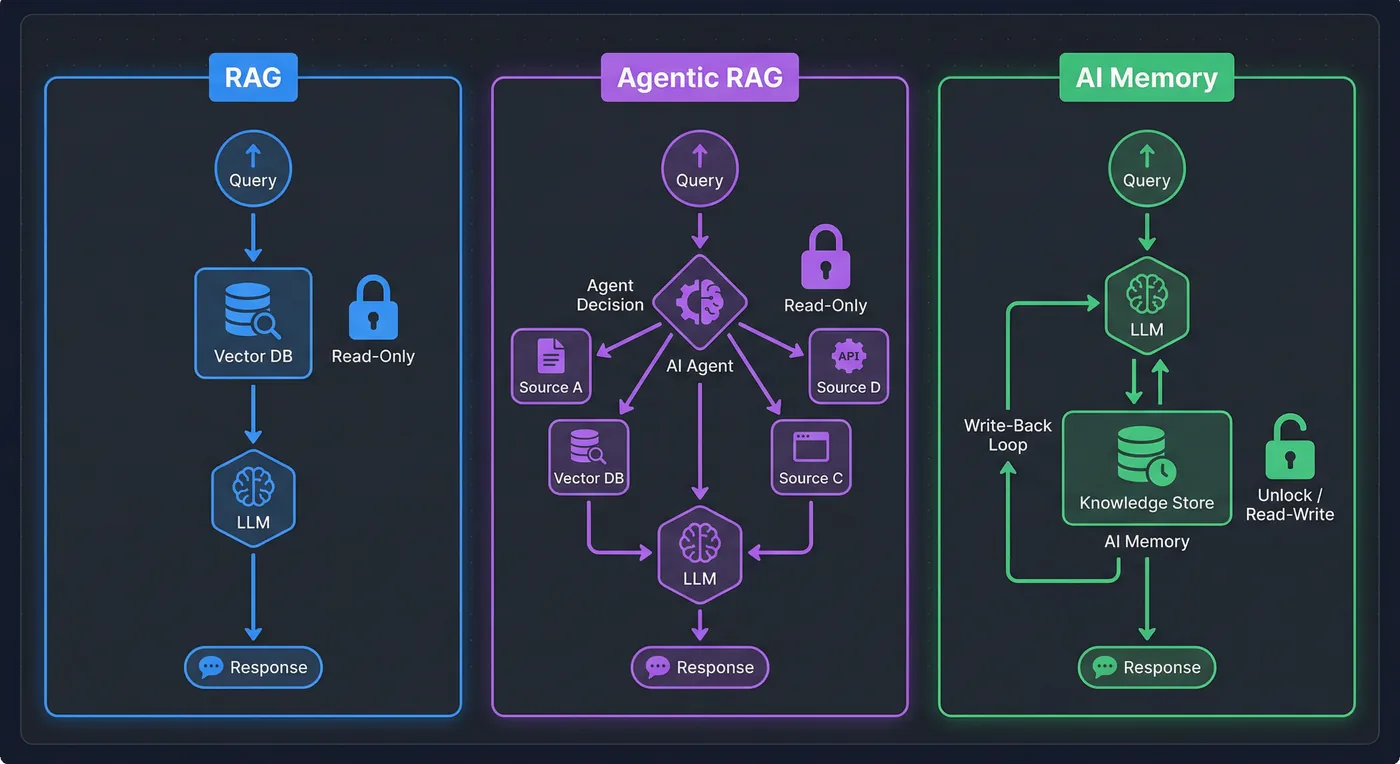
Classic RAG is conceptually simple: take a user query, retrieve the most relevant chunks from a vector database, inject them into the prompt, and let the LLM generate an answer. It solved a real problem — letting models answer questions about private or up-to-date data without expensive fine-tuning.
- How it works: Retrieve info once, generate response
- Decision-making: None — it always retrieves, regardless of whether retrieval is needed
- Direction: Read-only, one-shot. The knowledge base never changes based on user interactions
- Core problem: Often retrieves irrelevant or noisy context, and the system learns nothing from each conversation
RAG is excellent for static knowledge bases: product documentation, FAQ libraries, legal text. But the moment you need the system to adapt — to remember that a specific user prefers brief answers, or that a deal closed last Tuesday — classic RAG hits a wall.
Stage 2: Agentic RAG
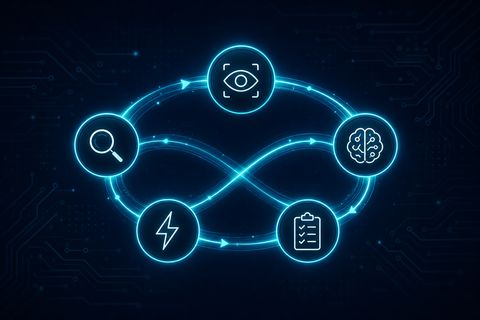
Agentic RAG wraps retrieval inside an agent loop. Instead of blindly fetching at every turn, the agent decides whether to retrieve, what to retrieve, and whether what it got back is actually useful before passing it to the model.
- Agent decides if retrieval is needed at all
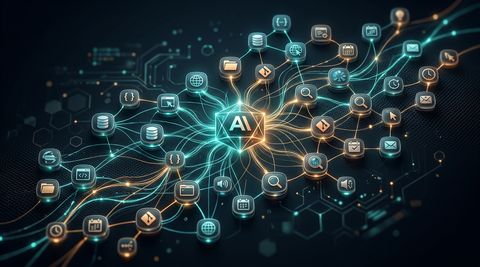
- Agent picks which source or tool to query (web search, internal docs, database)
- Agent validates if the retrieved result actually answers the question
- Still read-only: The agent cannot write back to the knowledge store; it cannot learn from the interaction
This is a big improvement over naive RAG — retrieval quality goes up, irrelevant noise goes down. But the fundamental constraint remains: every session starts from zero. The agent has no memory of who it talked to yesterday, what worked last time, or what a specific user has told it over dozens of conversations.
Stage 3: AI Memory
AI Memory is the unlock that turns an agent from a stateless service into something that genuinely knows you. The difference is not just architectural — it is experiential. An agent with memory does not need to ask for your name every time, does not repeat suggestions you have already rejected, and builds a richer model of your needs with every interaction.
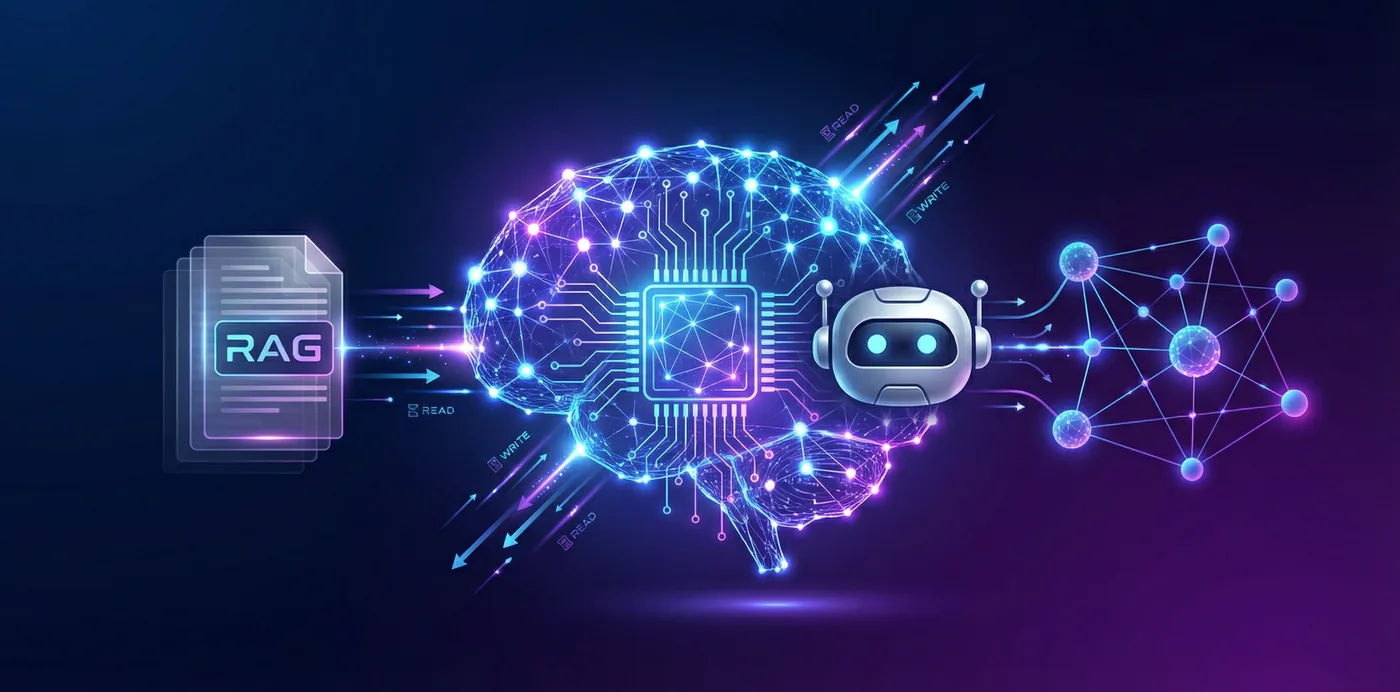
- Read and write to external knowledge — the agent updates what it knows after every conversation
- Learns from past conversations — what worked, what did not, what the user cares about
- Remembers user preferences and context — tone, goals, history, constraints
- Enables true personalization — responses improve over time for each individual user
This is not science fiction. It is happening in production systems today with tools like Cognee, MemGPT, and custom memory layers built on top of knowledge graphs.
The Mental Model at a Glance
The simplest way to hold these three stages in your head:
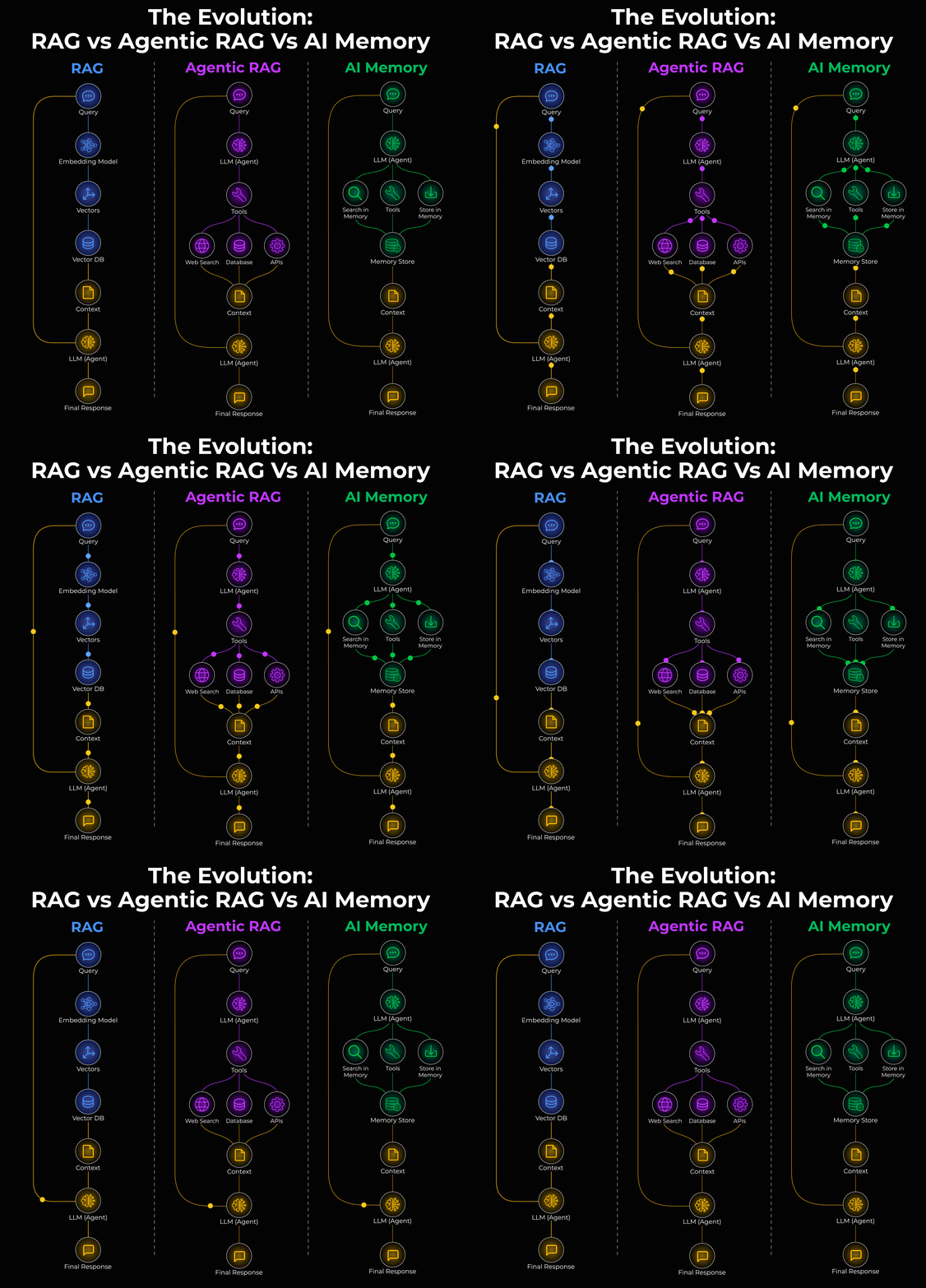
| Stage | Access | How | Learns? |
|---|---|---|---|
| RAG | Read-only | One-shot retrieval | No |
| Agentic RAG | Read-only | Via tool calls | No |
| AI Memory | Read + Write | Via tool calls | Yes |
Why Agent Memory Changes Everything
The practical impact of read-write memory is enormous. An agent can now "remember" things across sessions: user preferences, past decisions, important dates, recurring problems, and what solutions have already been tried. All stored in an external knowledge layer, retrievable in any future interaction.
But the bigger unlock is continual learning. Instead of being frozen at training time, agents accumulate knowledge from every interaction. They improve over time without any retraining, without any data labeling pipeline, without shipping a new model version. The knowledge graph grows richer every day just by doing its job.
This is the bridge from static models to truly adaptive AI systems. A support agent that gets better at your product with every ticket. A sales assistant that learns your prospects' objections over hundreds of calls. A personal assistant that actually knows you after a month of use.
Memory is what makes AI feel less like a tool and more like a colleague.
New Challenges Memory Introduces
Memory is powerful, but it is not free. It introduces a class of problems that RAG systems never had to deal with:
- Memory corruption: If the agent writes incorrect or misleading information, that error persists and compounds. Bad memories need to be detected and corrected.
- What to forget: Not all information should be kept forever. Stale preferences, outdated facts, and irrelevant history can degrade response quality. The system needs principled forgetting.
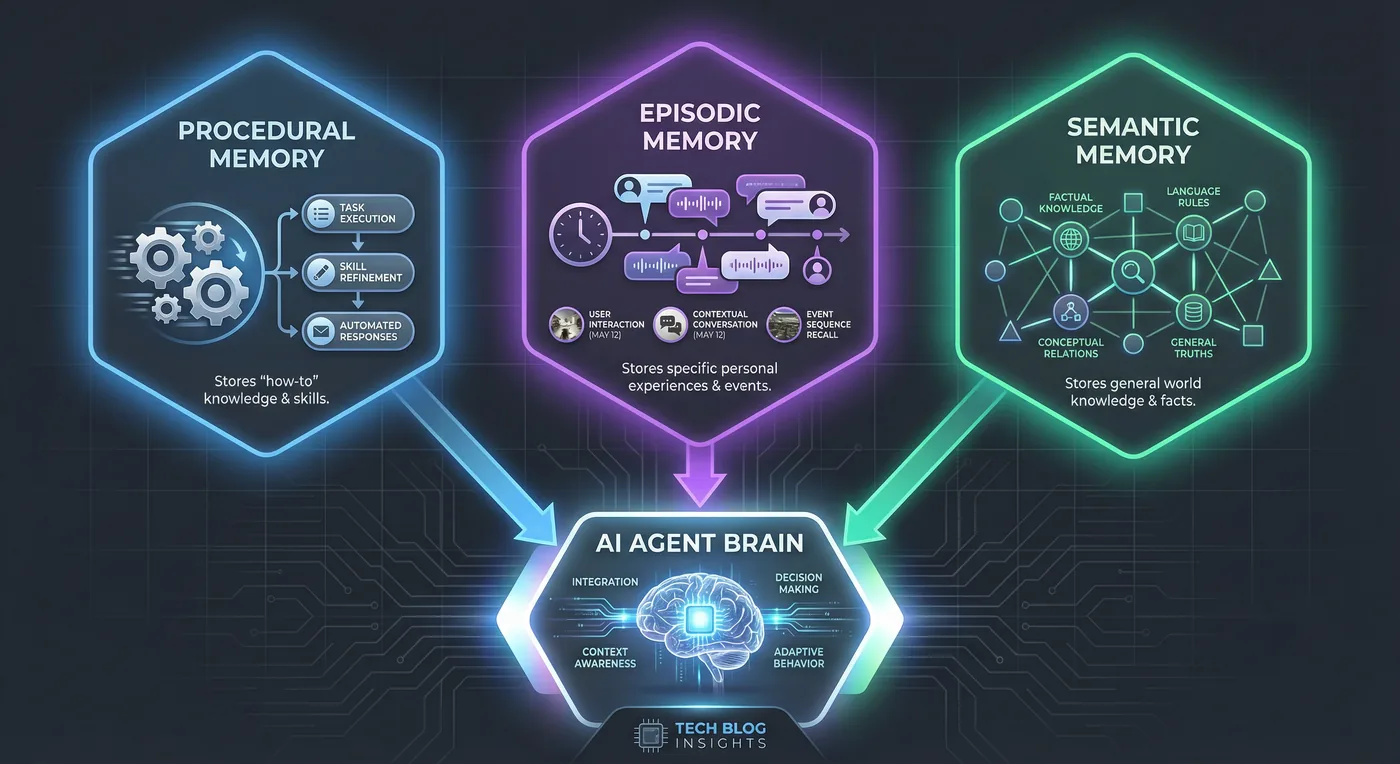
- Multiple memory types: Agents need different stores for different purposes — procedural memory for how to do things, episodic memory for specific past interactions, and semantic memory for general factual knowledge. Each has different retrieval and update semantics.
- Privacy and access control: User memories must be isolated. What one user shares must never surface in another user's session.
- Retrieval at scale: As the memory store grows, retrieval latency and relevance both become harder to maintain.
Solving these problems correctly from scratch requires significant engineering. That is exactly the problem Cognee is built to solve.
Cognee: Self-Evolving AI Memory
If you want to build agents that never forget — and forget the right things when they should — Cognee is an open-source framework with 12k+ GitHub stars specifically designed for real-time knowledge graphs and self-evolving AI memory.
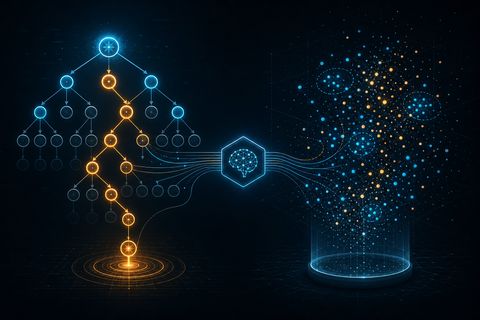
Rather than a flat vector store, Cognee builds a dynamic knowledge graph from your data. Entities, relationships, and context are all connected. When an agent writes a new memory, Cognee links it to existing knowledge. When it retrieves, it traverses the graph for richer, more accurate context.
Getting started is remarkably simple:
await cognee.add("Your data here")
await cognee.cognify()
await cognee.memify()
await cognee.search("Your query here")- cognee.add() — ingest any data: documents, conversations, structured records
- cognee.cognify() — process and structure the data into the knowledge graph
- cognee.memify() — build the memory layer, linking new knowledge to existing context
- cognee.search() — query the graph with natural language, getting graph-aware results
That is it. Cognee handles the storage, the graph updates, the memory deduplication, and the retrieval. Your agent gets a memory layer that actually learns over time without you managing any of the underlying complexity.
Conclusion
RAG solved the "my model doesn't know my data" problem. Agentic RAG made retrieval smarter and more contextual. But both are still read-only — and read-only systems cannot truly learn.
The next generation of AI agents will be defined by memory: the ability to read from and write to a persistent knowledge layer, accumulate understanding across sessions, and deliver genuinely personalized experiences that improve with every interaction. The foundational architecture is already here. Frameworks like Cognee make it practical to build today.
If you are still building agents that forget everything when the session ends, you are already a generation behind.
Resources
Ready to Build Agents That Remember?
At TecAdRise we design and implement AI agents with persistent memory, RAG pipelines, and knowledge graphs — built for real business needs. Get in touch for a technical assessment.
Get Started