Watch the Video
This article is a companion to our YouTube deep dive on the LLM Wiki concept. Watch the full breakdown below, or keep reading for the written guide with extra detail and resources.
The Problem: AI Has Amnesia
A few weeks ago, AI researcher Andrej Karpathy dropped a single idea on GitHub that set off an absolute firestorm. Not a new model, not fancy code, but a whole new way of thinking about knowledge management with AI.
He calls it the LLM Wiki. The core insight is simple but powerful: every AI system we use today, whether it is ChatGPT, Claude, or anything else, starts from zero every single time. There is no real memory. It is like having a brilliant expert who gets amnesia the second you walk away. Powerful, yes, but they never truly learn and grow from our interactions.
Why RAG Is Not Enough
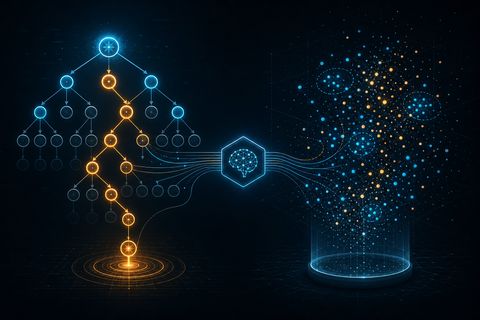
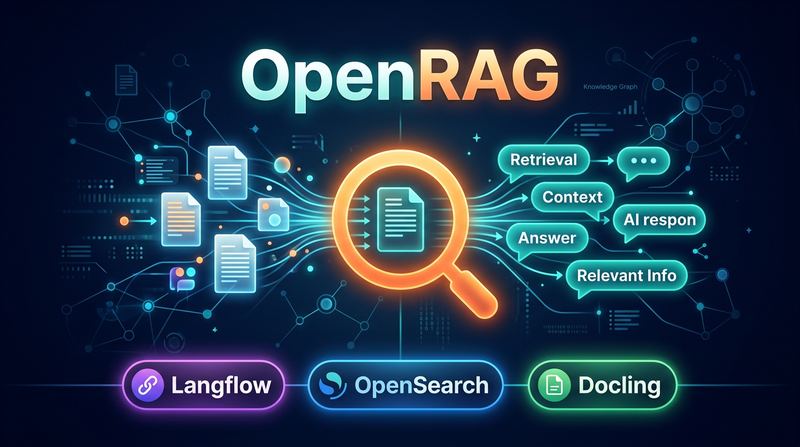
The current gold standard for giving AI long-term context is Retrieval-Augmented Generation (RAG). It can sift through mountains of documents to find an answer. But here is the catch: it does that every single time. It never builds a deeper, interconnected web of knowledge.
Think of it this way: RAG rereads the same books for every exam, never actually learning the material. It is a powerful retriever, but not a learner. And that gap, that inability to compound knowledge over time, is exactly what Karpathy set out to solve.
The Compounding Brain
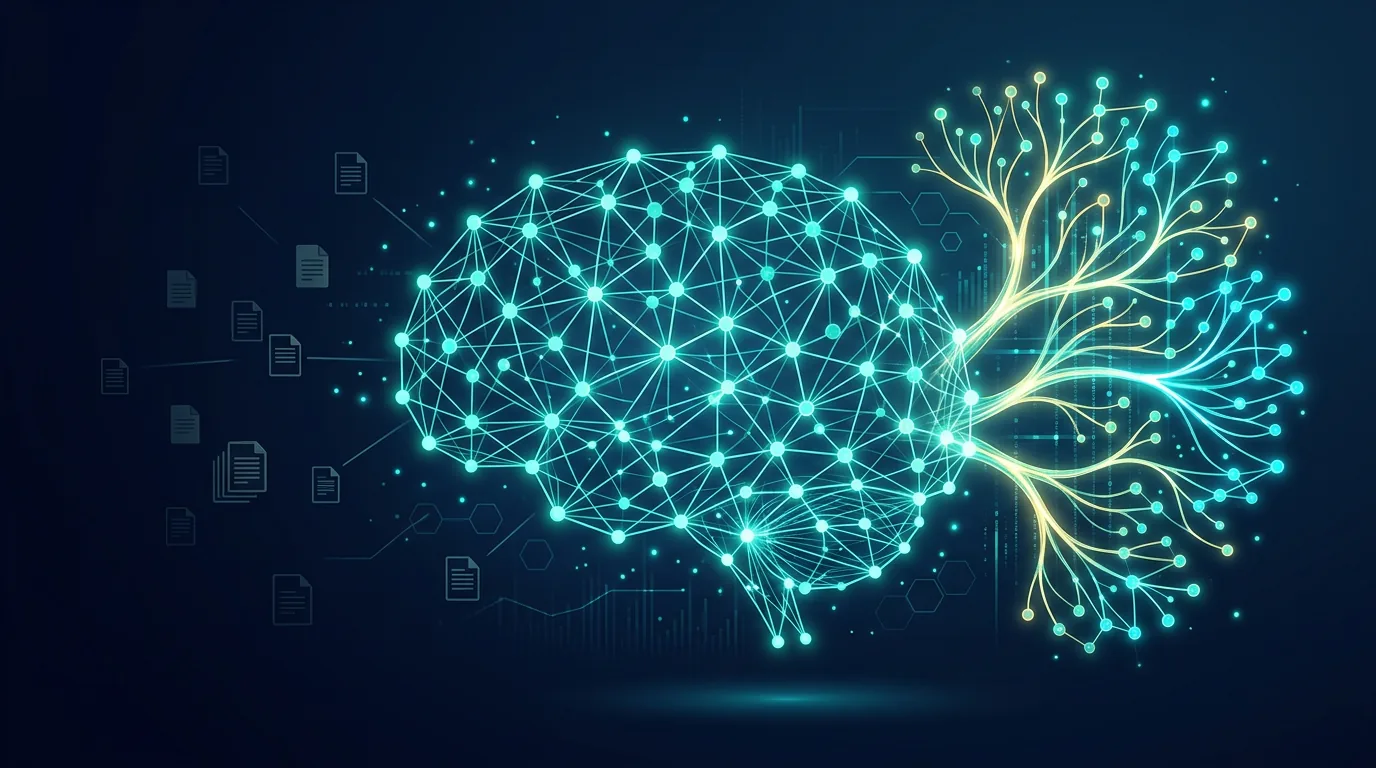
Karpathy's vision flips the script. Instead of a forgetful retriever constantly going back to raw source material, the LLM Wiki creates a compounding brain. The AI is no longer just a retriever, it is a builder. It constructs a persistent knowledge base where knowledge gets compiled once and then updated. The wiki itself becomes the memory.
He calls this a compounding artifact. It is not just a folder full of notes. Think of it more like a living garden. Every new piece of information is not just another plant, it is fertilizer for the entire ecosystem. The whole thing does not just get bigger, it actually gets smarter.
How the LLM Wiki Works
Karpathy uses a brilliant analogy: think of your note-taking app (like Obsidian) as your coding environment. The wiki you build is your code base. And the LLM is your tireless programmer, doing all the heavy lifting of writing, linking, and maintaining that code for you.
The system is built on three layers:
- Raw Sources: Your articles, PDFs, and notes. These are sacred and never changed. They are the absolute source of truth.
- The Wiki: Simple text files that the LLM has complete control over. This is where compiled knowledge lives.
- The Schema: The secret sauce. A strict rulebook that tells the LLM exactly how to build and maintain the wiki, turning it from a creative storyteller into a disciplined librarian.
Ingest, Query, and Lint
The wiki comes to life through three core operations:
- Ingest: Feed it a new document and the LLM reads it, then weaves its insights throughout the existing wiki, potentially updating ten different pages at once.
- Query: Ask a question and get an answer based on organized knowledge. If you get a great answer, you can tell the AI to save it as a brand new page, so your own curiosity makes the system smarter.
- Lint: A programming term for checking for errors. Tell the LLM to scan for contradictions or outdated information, and it will clean itself up automatically.
This self-maintaining cycle is what makes the LLM Wiki fundamentally different from a static document store or a traditional RAG pipeline.
The Reality Check
As soon as the idea hit the internet, the developer community started a serious reality check. Three major criticisms emerged:
- Hallucination risk: If the LLM makes a small mistake when summarizing a document and then uses that faulty summary to answer future questions, you create a feedback loop of compounding errors. A tiny hallucination could snowball into a major problem.
- Consistency concerns: LLMs are probabilistic. They guess the next word. Can a machine that generates text without real intent or understanding actually be trusted to write a meaningful, coherent knowledge base? It is a deep question about the nature of writing itself.
- Architectural limitations: Knowledge is not a neat little tree. It is a messy, complex web of interconnected ideas. Managing that web with simple links and text files might be fundamentally flawed. Some argue you need a graph database or something more powerful.
The Fix: Constrained Pipelines
The criticism did not kill the idea. It made it better. The community shifted from waiting for a perfect AI to building better systems around imperfect AIs. The goal became creating an incredible co-pilot that handles 90% of the grunt work, freeing up humans for high-level thinking.
The solution that emerged is a constrained pipeline, essentially guardrails on the AI:
- Strict schemas force the LLM to follow your formatting and organizational rules
- Confidence scoring makes the AI flag uncertain outputs instead of guessing
- Human-in-the-loop means when the AI finds a major contradiction it cannot solve, it creates a to-do list for a human to review rather than making a bad decision
- Source linking ensures the wiki always points back to original documents, so you can never drift too far from the source of truth
Community Projects
With these safety mechanisms in place, Karpathy's idea did not just survive, it went viral. Developers worldwide started building their own versions. Here are some standout projects:
| Project | Approach | Key Feature |
|---|---|---|
| Swarm Vault | Full-blown local app with graph viewer | Integrates 16 different AI agents, fully private |
| BrainDB | Team of 6 specialized AIs | Automated self-healing with live web fact-checking |
| Menmo Vault | Free, open-source, local-only | Runs on your machine using open-source models, no API costs |
Beyond these flagship projects, the ecosystem is buzzing with versions focused on strict data integrity, multi-language support, and refined ingestion pipelines. This is not one person's idea anymore, it has become a full-on movement.
What This Means for Small Business
If you run a small business, the LLM Wiki pattern matters because it solves a real problem: institutional knowledge that walks out the door when employees leave, or gets buried in email threads nobody will ever search again.
Imagine an AI assistant that actually remembers every client conversation, every process decision, every vendor negotiation, and organizes it into a searchable, growing knowledge base that gets smarter the more you use it. That is the promise here.
At TecAdRise, we are already building systems that use this pattern. Our MemPalace project implements private, local AI memory with semantic search. And our AI Memory Agents guide covers why RAG was always a stepping stone to something bigger. If you want this built for your business, see custom AI agents and AI voice agents with persistent memory.
Resources
Ready to Build AI Memory for Your Business?
We build AI systems that actually remember. From compounding knowledge bases to AI receptionists that learn from every call, let us show you what persistent AI can do. Explore custom AI agents for production deployments.
Get Free Demo