What MemPalace Actually Is
MemPalace is a local-first AI memory system built to solve one of the most annoying problems in modern AI workflows: your best context disappears the moment the session ends. If you use Claude Code, Gemini CLI, ChatGPT exports, or project chat logs every day, you already know the pain. The model helps you reason through a hard problem, you close the tab, and the chain of decisions, trade-offs, and failed ideas becomes hard to recover later.
The official MemPalace README describes the project as local-first AI memory with verbatim storage, a pluggable backend, and semantic retrieval over a structured index. Instead of summarizing and shrinking your conversations into lossy notes, it stores the original text and gives that history a navigable structure. Nothing leaves your machine unless you choose to send it somewhere.
That matters because most memory layers make an early compromise: compress first, interpret later. MemPalace flips that. It keeps the raw source intact, then uses structure and retrieval to bring back what matters when you need it.

Why AI Memory Matters
Stateless AI is fine for one-off prompts. It breaks down when you do serious work in chat. Debugging sessions, architecture reviews, product decisions, prompt iterations, and research trails all live inside windows built to be temporary. That means the highest-value context is often the least durable part of the workflow.
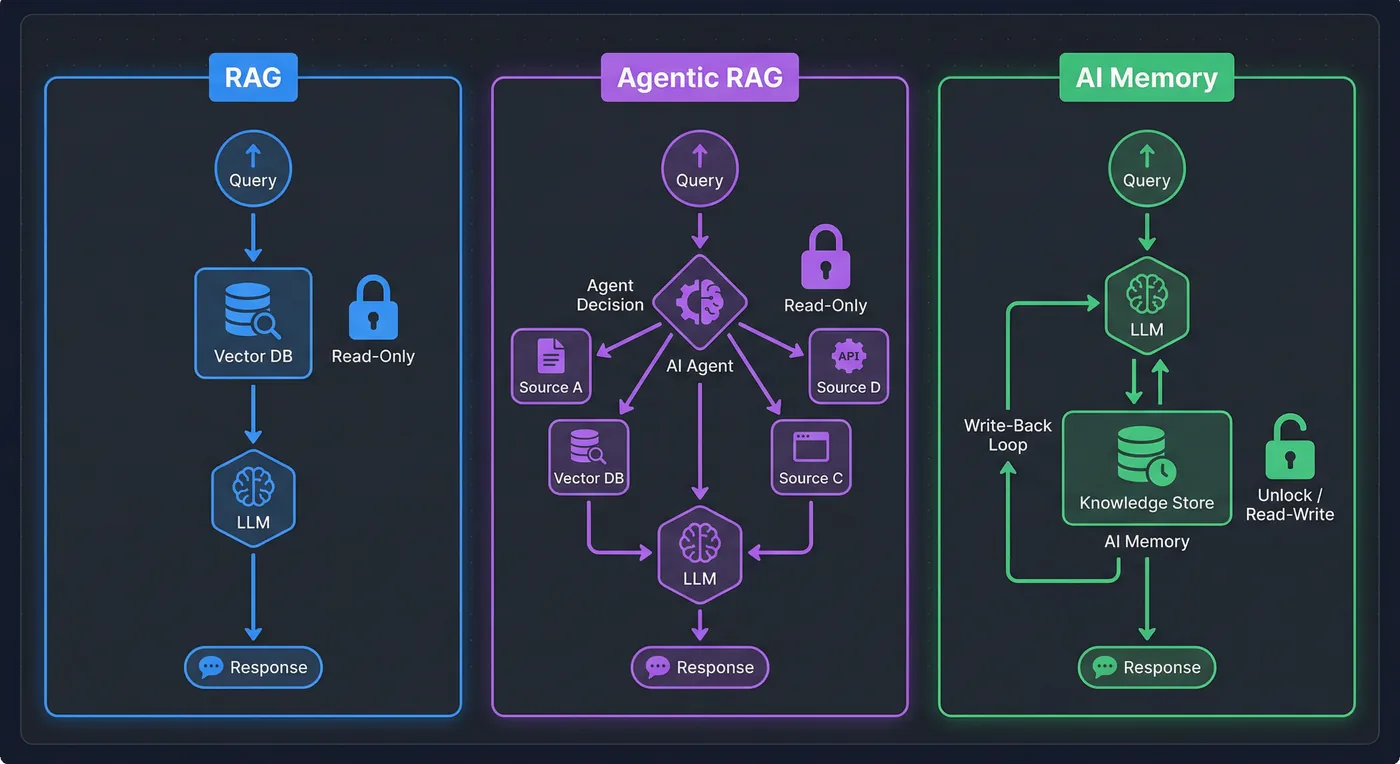
This is why AI memory is now one of the most important infrastructure layers in agent systems. If an assistant cannot remember your previous choices, rejected approaches, naming conventions, or open questions, it keeps re-solving the same problem from scratch. That costs time, tokens, and focus. It also makes the AI feel less like a teammate and more like a talented contractor with zero short-term memory.
MemPalace is compelling because it targets that exact gap. It is not trying to be another hosted AI wrapper. It is trying to become a personal memory layer you can query, search, and wake back up across sessions and tools.
The Memory Palace Structure
The idea borrows from the classic memory palace technique, but turns it into a practical retrieval model for AI. In MemPalace, people and projects become wings, topics become rooms, and original source material lives in drawers. Searches can then be scoped to the right area instead of being thrown at one giant flat pile of embeddings.
That structure is not just a cute metaphor. It changes how recall works. A flat vector search can bring back semantically similar text from the wrong project or the wrong time period. A structured palace can narrow the search surface first, then retrieve the exact drawer that contains the original context.
| Layer | What it represents | Why it helps |
|---|---|---|
| Wing | Project, person, or major context area | Separates unrelated work before search runs |
| Room | Topic inside that project | Keeps similar decisions together |
| Drawer | Original untouched source material | Preserves full context instead of summaries |
What the Official Benchmarks Say
The current official README makes a stronger case than most memory tools because it publishes specific benchmark claims and explains the methodology. On LongMemEval, MemPalace reports 96.6% R@5 raw with no API key, no cloud service, and no LLM in the loop. The held-out hybrid pipeline is listed at 98.4%, while the reranked pipeline is described as 99%+ depending on the model used for reranking.
That is an important nuance if you watched earlier clips or social posts that framed the project around a perfect score. The latest README explicitly says the team does not headline a 100% number, because the final fraction depended on inspecting specific failures and they do not want to teach to the test. That makes the benchmark section more credible, not less.
- 96.6% raw R@5, semantic search only, no heuristics, no LLM
- 98.4% held-out hybrid R@5, tuned on a small dev set, evaluated on unseen questions
- 99%+ reranked, with an LLM choosing the best candidate from top retrieved sessions
- 29 MCP tools, covering reads, writes, graph operations, and navigation inside the palace
For builders, the takeaway is simple: this is not just a poetic metaphor layered on top of a vector store. It is a retrieval system with published numbers, a local-first stance, and enough tooling to plug into real agent workflows.
Verbatim Storage, AAAK, and Why That Matters
One subtle but important point: the default MemPalace philosophy is still verbatim storage. It does not summarize, paraphrase, or extract by default. That means you can always return to the untouched conversation instead of trusting an LLM summary that may have dropped the exact reason a decision was made.
The project also mentions an experimental compression dialect called AAAK. That part is interesting, but it is not the core product promise. In the current README, AAAK is presented as a separate, lossy compression layer for token packing, not the default storage mode. So if you are evaluating MemPalace, the biggest win is not shorthand compression. The biggest win is keeping the source of truth intact while still making it searchable.
That design choice is what makes the tool attractive for code review trails, architecture debates, research archives, and long-running client work. Those are domains where the exact wording, order of reasoning, and rejected options often matter as much as the final conclusion.
Where It Fits in Real Workflows
MemPalace is most useful for people who already work in agent loops, not casual AI dabbling. If you run Claude Code against repositories, keep structured notes for clients, or build specialist agents around one domain, a persistent memory layer becomes leverage. The current quickstart is straightforward: mine project files or conversation exports, search the palace, then use wake-up to load context for the next session.
pip install mempalace
mempalace init ~/projects/myapp
mempalace mine ~/projects/myapp
mempalace search "why did we switch to GraphQL"
mempalace wake-up
The other interesting piece is the MCP server. With 29 tools covering palace reads and writes, graph queries, cross-wing navigation, and agent diaries, MemPalace is moving beyond passive retrieval. It can become an active memory subsystem for specialist agents. One agent can own code review history. Another can track product decisions. Another can stay scoped to one client or repository.
Watch the Video Breakdown
This article supports our YouTube breakdown of MemPalace, where we walk through the lost-context problem, the memory palace metaphor, and why local-first AI memory changes how daily AI work feels in practice. If you want the visual version first, watch the full video below.
In short, the appeal is not just cost or retrieval quality. It is trust. A local memory layer that keeps original context, exposes it through search and MCP tools, and works across models is exactly the kind of infrastructure missing from many AI setups in 2026.
Conclusion
MemPalace matters because it treats memory as first-class infrastructure, not a bolt-on feature. The strongest parts of the project are not hype words. They are the local-first default, verbatim storage, structured retrieval, published benchmark methodology, and growing MCP tooling.
If your AI work now includes coding, research, architecture, or multi-session problem solving, you need more than a bigger context window. You need a system that can preserve and recover your real working history. MemPalace looks like one of the most serious open-source attempts to do that right now.
Resources
Want AI Agents That Remember Past Work?
At TecAdRise we build AI systems with persistent memory, RAG, MCP integrations, and workflow automation. If you want a practical memory layer for your agents, get in touch.
Get Started